The retina plays a very important role in our ability to see clearly. It is a thin, light-sensitive layer at the back of the eye that sends visual information to the brain. When the retina becomes damaged due to diabetes, ageing, injury or other eye conditions, it can affect eyesight and sometimes lead to permanent vision loss.
The biggest concern is that many retinal problems develop without noticeable symptoms in the early stages. By the time a person experiences blurred vision, dark spots or difficulty seeing, the condition may already need medical attention.
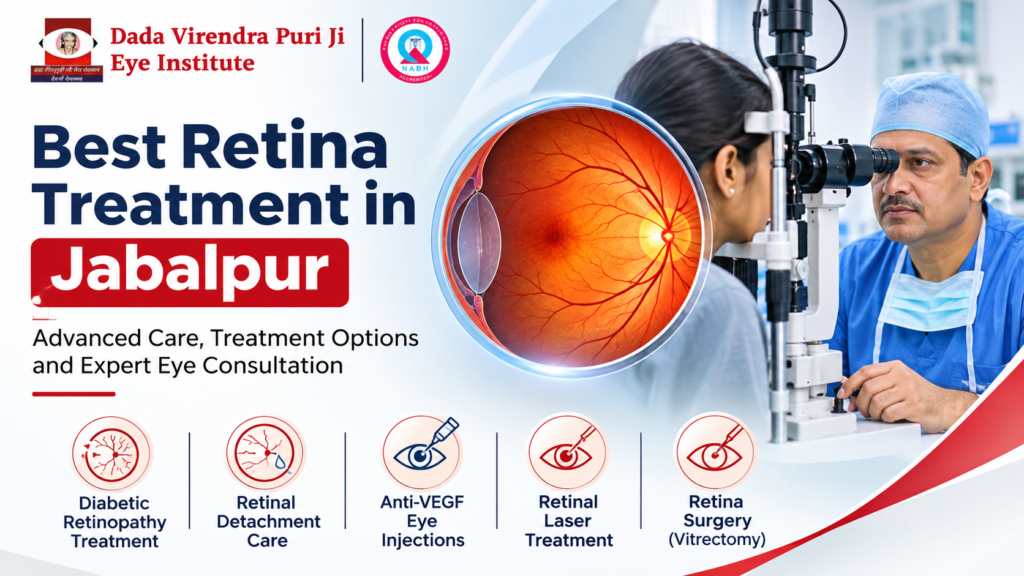
If you are searching for the best retina treatment in Jabalpur, choosing an eye hospital that can properly examine the retina, identify the underlying problem and recommend suitable treatment is essential.
Dada Virendra Puri Ji Eye Institute (DVJEI) in Jabalpur is a destination to consider for professional eye care and retina consultation. Whether you are experiencing vision changes due to diabetes, retinal damage or age-related eye problems, timely examination can help protect your eyesight.
Let’s understand the common retinal conditions, available treatment options and what you should look for when choosing a retina hospital in Jabalpur.
What Is Retina Treatment and Why Is It Important?
Retina treatment refers to medical procedures used to diagnose and manage diseases affecting the retina. The right treatment depends on the type of retinal condition, its severity and how much it has affected your vision.
Some retinal conditions can be managed with regular monitoring and medication, while others may require laser treatment, injections or surgery.
Early diagnosis is important because certain retinal diseases can progress without causing pain or obvious symptoms.
A retina specialist can examine the back of your eye, identify changes in retinal tissue and recommend an appropriate treatment plan.
Common Retina Problems That Require Medical Attention
Before choosing a treatment, it is important to understand what may be affecting your eyesight.
1. Diabetic Retinopathy
Diabetic retinopathy is one of the common causes of vision problems among people living with diabetes. High blood sugar levels can damage the small blood vessels in the retina, causing them to leak or become blocked.
Common symptoms include:
- Blurred or fluctuating vision
- Dark spots or floaters
- Difficulty seeing clearly
- Poor night vision
- Sudden changes in eyesight
In its early stages, diabetic retinopathy may not cause any symptoms. This is why people with diabetes should undergo regular comprehensive eye examinations.
Depending on the condition, treatment may include anti-VEGF injections, retinal laser treatment or surgery. National Eye Institute+1
2. Retinal Detachment
Retinal detachment is a serious eye condition in which the retina separates from its normal position at the back of the eye.
It requires urgent medical attention because delayed treatment can result in permanent vision loss.
Watch for these warning signs:
- Sudden appearance of many floaters
- Flashes of light
- A dark shadow or curtain-like effect
- Sudden reduction in vision
- Blurred vision in one eye
Treatment may involve laser procedures for suitable retinal tears or surgery such as vitrectomy, depending on the extent of detachment.
If you notice sudden flashes, new floaters or a curtain-like shadow, seek immediate eye care. Do not wait for a routine appointment. National Eye Institute+1
3. Age-Related Macular Degeneration (AMD)
Macular degeneration affects the macula, the central part of the retina responsible for detailed vision.
It is more common among older adults and can make everyday activities such as reading, recognising faces and driving difficult.
Some common symptoms are:
- Straight lines appearing wavy
- Difficulty reading small text
- Blurred central vision
- Dark or empty spots in the centre of vision
Treatment depends on whether the condition is dry or wet AMD. Wet AMD may be treated with anti-VEGF injections, while dry AMD generally requires monitoring and, in selected cases, specific nutritional supplements recommended by an eye specialist.
4. Retinal Vein Occlusion
Retinal vein occlusion occurs when a vein carrying blood away from the retina becomes blocked. This can cause blood and fluid to leak into retinal tissue.
People with diabetes, high blood pressure and certain cardiovascular conditions may have a higher risk.
Symptoms can include sudden blurred vision, dark spots or reduced vision in one eye.
Treatment may involve eye injections, laser therapy or monitoring, depending on the severity and location of the blockage.
Best Retina Treatment Options Available Today
There is no single treatment that works for every retinal disease. A retina specialist first identifies the condition and then decides which treatment is suitable.
Here are some commonly used retina treatment options.
1. Retinal Laser Treatment
Retinal laser treatment uses focused light to treat specific areas of the retina.
It is commonly used in certain cases of diabetic retinopathy and retinal tears. The purpose may be to seal leaking blood vessels, reduce the risk of further damage or prevent a retinal tear from progressing.
The procedure is generally performed using numbing eye drops and specialised equipment. Some patients may need more than one session.
Laser treatment is not suitable for every retinal condition. National Eye Institute+1
2. Anti-VEGF Eye Injections
Anti-VEGF injections are used to treat several retinal conditions, particularly diabetic macular oedema and wet age-related macular degeneration.
These medicines help reduce abnormal blood vessel growth and leakage inside the retina.
The medicine is injected into the eye by an eye specialist under sterile conditions.
Depending on the patient’s response, multiple injections may be required over time. Regular follow-up visits are important to monitor the results. National Eye Institute+1
3. Vitrectomy Surgery
Vitrectomy is a specialised eye surgery used to treat certain serious retinal and vitreous conditions.
During the procedure, the surgeon removes some or most of the vitreous gel inside the eye to access the retina.
It may be recommended for conditions such as:
- Retinal detachment
- Severe diabetic retinopathy
- Bleeding inside the eye
- Certain retinal scar tissues
Depending on the condition, the surgeon may also use laser treatment or place a gas bubble or silicone oil inside the eye to support the retina. National Eye Institute+1
4. Regular Retina Monitoring
Not every retinal problem requires immediate surgery or injections.
Some conditions can be managed through regular examinations and monitoring. This is particularly important for patients with diabetes and those at risk of age-related retinal diseases.
Following the recommended examination schedule helps doctors identify changes and start treatment when needed.
How Is a Retina Problem Diagnosed?
Before recommending the best retina treatment, an eye specialist needs to understand the exact condition affecting the retina.
Depending on the symptoms and medical history, the examination may include:
1. Dilated Fundus Examination: Eye drops are used to widen the pupils so the doctor can examine the retina and optic nerve.
2. Optical Coherence Tomography (OCT): This scan provides detailed images of retinal layers and helps identify swelling, fluid accumulation and other changes.
3. Fundus Photography: It captures images of the retina, which can help doctors document and monitor retinal conditions.
4. Fundus Fluorescein Angiography (FFA): In selected cases, a special dye is injected into a vein to examine blood circulation in the retina.
Not every patient needs all these tests. The eye specialist decides which investigations are appropriate after examining the patient.
Why Choose DVJEI for Retina Consultation in Jabalpur?
When dealing with a retinal condition, patients need more than a routine eye examination. They need an accurate diagnosis, clear information about available treatments and proper follow-up care.
Dada Virendra Puri Ji Eye Institute (DVJEI) is an established eye care institute in Jabalpur that patients can consider for their eye health needs.
Here are some important factors to consider when seeking retina care at DVJEI:
Experienced Eye Care Guidance
A proper eye examination helps identify the reason behind vision changes. Patients can discuss their symptoms, medical history and treatment requirements with the eye care team.
Complete Eye Care Under One Roof
Retinal problems can sometimes occur alongside cataracts, glaucoma and other eye conditions. Access to comprehensive ophthalmic evaluation helps doctors understand the patient’s overall eye health.
Focus on Early Diagnosis
Many retinal diseases do not show clear warning signs in their early stages. Timely examinations are particularly important for people with diabetes, high blood pressure and a family history of eye disease.
Patient Guidance and Follow-Up
Retina treatment may require regular monitoring. Understanding the treatment plan, follow-up schedule and precautions helps patients manage their condition more effectively.
If you are looking for a retina hospital in Jabalpur, consult DVJEI to discuss your symptoms and the appropriate examination or treatment options.
Who Should Get a Retina Eye Examination?
You should consider a retina examination if you:
- Have diabetes, even if your vision appears normal.
- Experience sudden blurred vision or floaters.
- Notice flashes of light in your vision.
- Have a family history of retinal diseases.
- Have high myopia (severe short-sightedness).
- Have experienced an eye injury.
- Have previously undergone retinal treatment or surgery.
People with diabetes should generally have a comprehensive dilated eye examination at least once a year, although their doctor may recommend more frequent examinations depending on their condition. National Eye Institute+1
Tips to Protect Your Retinal Health
Although not every retinal disease can be prevented, certain habits can help reduce risks and support overall eye health.
- Keep your blood sugar levels under control if you have diabetes.
- Monitor your blood pressure and cholesterol.
- Eat a balanced diet with green vegetables and other nutrient-rich foods.
- Avoid smoking.
- Attend regular eye examinations.
- Never ignore sudden changes in your vision.
- Follow your eye specialist’s treatment and follow-up advice.
Remember, a healthy lifestyle supports eye health, but it cannot replace a proper retinal examination.
Book Your Retina Consultation at DVJEI, Jabalpur
Your eyesight is too important to ignore. Retinal diseases can progress silently, and delaying an examination may reduce the available treatment options.
If you are experiencing blurred vision, floaters, flashes of light or other unusual changes, consult an eye specialist without delay.
At Dada Virendra Puri Ji Eye Institute (DVJEI), Jabalpur, patients can seek guidance for their eye care needs and discuss suitable diagnostic and treatment options.
Whether you are concerned about diabetic retinopathy, retinal detachment or another retinal condition, the first step is getting the right diagnosis.
Don’t wait for your vision to get worse. Book your eye consultation at DVJEI today.
Visit: www.dvjei.org
Frequently Asked Questions (FAQs)
1. Which is the best retina hospital in Jabalpur?
When choosing a retina hospital in Jabalpur, look for experienced ophthalmologists, proper retinal diagnostic facilities, suitable treatment options and reliable follow-up care. DVJEI is an eye care institute you can consider for a retina consultation.
2. What is the best treatment for retinal problems?
The best treatment depends on the underlying condition. Options may include retinal laser treatment, anti-VEGF injections, vitrectomy surgery or regular monitoring.
3. Can retinal damage be reversed?
It depends on the type and severity of retinal damage. Some conditions can be treated successfully, while existing damage may not always be reversible. Early diagnosis offers a better opportunity to protect remaining vision.
4. Is retinal laser treatment painful?
Retinal laser treatment is generally performed using numbing eye drops. Some patients may experience mild discomfort or see flashes of light during the procedure.
5. How much does retina treatment cost in Jabalpur?
The cost depends on the condition, diagnostic tests, medicines and type of treatment required. Laser treatment, eye injections and retinal surgery have different costs. Consult the hospital for an estimate based on your examination.
6. Can diabetes cause permanent retinal damage?
Yes. Uncontrolled diabetes can damage retinal blood vessels and cause diabetic retinopathy. If left untreated, advanced disease can lead to permanent vision loss. Regular eye examinations are important for people with diabetes.
7. When should I consult a retina specialist?
Consult a retina specialist if you notice sudden floaters, flashes of light, blurred vision, distorted images or dark shadows. Sudden symptoms require urgent medical attention.
8. Is retina surgery always necessary?
No. Many retinal conditions can be managed with injections, laser treatment or regular monitoring. Surgery is recommended only when the condition requires it.