
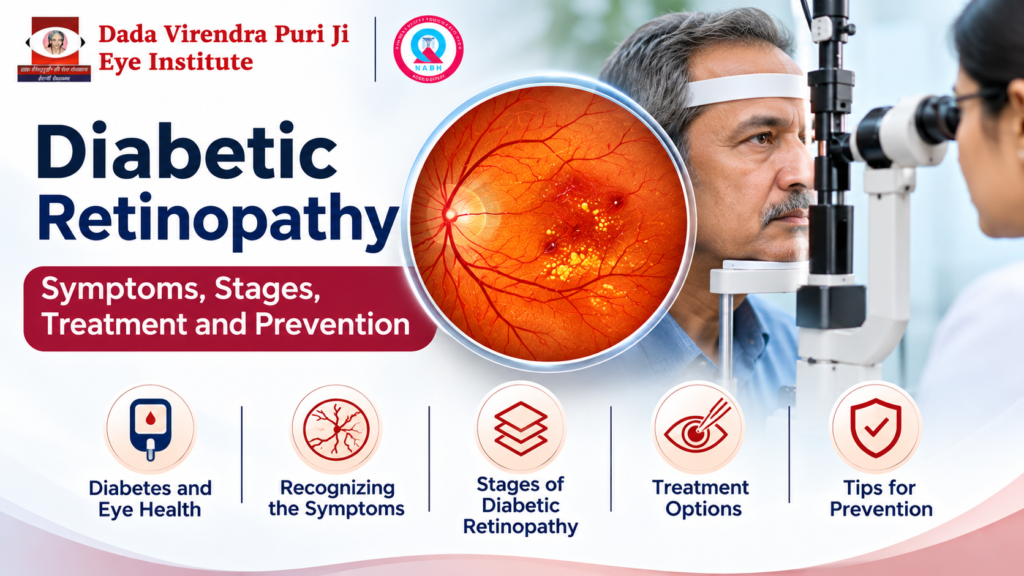
Diabetes can affect more than blood sugar levels. Over time, consistently high blood glucose can damage small blood vessels throughout the body, including those supplying the retina. This can lead to a condition known as diabetic retinopathy, a diabetes-related eye disease that may affect vision if it progresses.
One of the important challenges with diabetic retinopathy is that it may develop without noticeable symptoms during its early stages. A person may continue with normal daily activities while changes are gradually occurring inside the eye. This is why regular eye examinations are an important part of diabetes management.
Understanding diabetic retinopathy symptoms, stages, diagnosis and treatment options can help people with diabetes make informed decisions about their eye health. This guide explains what happens to the retina, when medical attention may be needed and how regular monitoring can help manage the condition.
What Is Diabetic Retinopathy?
Diabetic retinopathy is an eye condition caused by damage to the small blood vessels in the retina due to diabetes.
The retina is a light-sensitive layer located at the back of the eye. It receives light and converts it into signals that are transmitted to the brain, allowing us to see.
When blood glucose levels remain elevated over a prolonged period, the delicate retinal blood vessels may become weakened. They can swell, leak fluid or blood, and sometimes become blocked. In advanced cases, abnormal new blood vessels may develop on the retinal surface.
These changes can affect the retina’s normal functioning and may lead to blurred vision or other visual problems.
Diabetic retinopathy can affect people with both Type 1 and Type 2 diabetes. The likelihood of developing the condition generally increases with the duration of diabetes and other associated risk factors.
What Causes Diabetic Retinopathy?
The main cause of diabetic retinopathy is prolonged exposure to elevated blood glucose levels. Over time, high blood sugar can damage the walls of the tiny blood vessels that supply the retina.
Several factors can influence the development and progression of this condition.
Common risk factors include:
- Poor blood sugar control: Persistently elevated glucose levels can increase damage to retinal blood vessels.
- Long duration of diabetes: The risk of diabetic retinopathy generally increases the longer a person has diabetes.
- High blood pressure: Uncontrolled hypertension can contribute to retinal blood vessel damage.
- High cholesterol: Abnormal cholesterol levels may increase the risk of retinal complications.
- Pregnancy: Women with pre-existing diabetes may experience changes in diabetic retinopathy during pregnancy.
- Smoking: Smoking can negatively affect blood vessel health and overall diabetes management.
Having one or more risk factors does not automatically mean that someone will develop diabetic retinopathy. Regular medical monitoring helps identify changes and assess individual risk.
What Are the Symptoms of Diabetic Retinopathy?
In its early stages, diabetic retinopathy often does not cause noticeable symptoms. Vision may remain normal even when retinal blood vessels have started developing damage.
As the condition progresses, different visual symptoms may appear.
Common diabetic retinopathy symptoms include:
- Blurred vision: Objects may appear unclear, making reading and other everyday activities difficult.
- Floaters: Small dark spots, dots or thread-like shapes may appear in the field of vision.
- Dark or empty areas: Some people may notice patches where their vision appears missing or obstructed.
- Fluctuating vision: Vision may change between clear and blurry during the day.
- Difficulty seeing at night: Reduced visibility in low-light conditions may occur.
- Distorted vision: Straight lines or objects may appear wavy or distorted, particularly when the macula is affected.
- Reduced colour perception: Colours may appear less vivid in some cases.
Important: These symptoms can also occur due to other eye conditions. An eye examination is necessary to determine the underlying cause.
If you experience sudden vision loss, a sudden increase in floaters, flashes of light or a curtain-like shadow across your vision, seek urgent ophthalmic assessment.
What Are the Different Stages of Diabetic Retinopathy?
Diabetic retinopathy generally progresses through four stages. The severity depends on the extent of damage to the retinal blood vessels and whether abnormal new blood vessels have developed.
1. Mild Non-Proliferative Diabetic Retinopathy (Mild NPDR)
This is the earliest stage of diabetic retinopathy.
Small areas of swelling, known as microaneurysms, develop in the tiny blood vessels of the retina. These weakened vessels may begin leaking small amounts of fluid or blood.
At this stage, most people do not experience noticeable vision changes.
Management: Regular retinal examinations and appropriate diabetes management are important. Treatment may not be required immediately, depending on the examination findings.
2. Moderate Non-Proliferative Diabetic Retinopathy (Moderate NPDR)
As the condition progresses, more retinal blood vessels become damaged. Some vessels may swell, leak fluid or become blocked, reducing the blood supply to parts of the retina.
Changes may become more noticeable during a detailed retinal examination, although a person may still have no obvious symptoms.
Management: The ophthalmologist may recommend closer monitoring and additional retinal investigations depending on the severity and presence of macular involvement.
3. Severe Non-Proliferative Diabetic Retinopathy (Severe NPDR)
At this stage, a larger number of retinal blood vessels become blocked. This reduces the oxygen supply to several areas of the retina.
The retina may respond by producing signals that encourage the formation of new blood vessels.
Although abnormal new vessels have not yet developed in this stage, the risk of progression is higher.
Management: Assessment by a retina specialist is important. Depending on the findings, closer monitoring or treatment may be considered.
4. Proliferative Diabetic Retinopathy (PDR)
Proliferative diabetic retinopathy is an advanced stage of the disease.
The retina develops abnormal new blood vessels in response to reduced oxygen supply. These vessels are fragile and may bleed into the vitreous, the gel-like substance inside the eye.
Bleeding, scar tissue formation and retinal detachment may occur in advanced cases.
Management: Treatment options may include anti-VEGF injections, laser photocoagulation or vitrectomy surgery, depending on the retinal condition and clinical assessment.
What Is Diabetic Macular Edema?
Diabetic macular edema (DME) is a complication associated with diabetic retinopathy.
The macula is the central part of the retina responsible for detailed vision, including reading, recognising faces and seeing fine details.
When damaged retinal blood vessels leak fluid, the macula may become swollen. This swelling can affect central vision.
Common symptoms may include:
- Blurred central vision.
- Difficulty reading small text.
- Distorted or wavy lines.
- Difficulty recognising fine details.
- Changes in colour perception.
Diabetic macular edema can develop at different stages of diabetic retinopathy. Its presence and severity are assessed through retinal examination and imaging tests such as Optical Coherence Tomography (OCT).
How Is Diabetic Retinopathy Diagnosed?
Early diagnosis is important because diabetic retinopathy may not cause noticeable symptoms initially.
An ophthalmologist or retina specialist may recommend different examinations to assess the condition of the retina.
1. Dilated Fundus Examination
Eye drops are used to widen the pupils, allowing the doctor to examine the retina and identify changes in its blood vessels.
This examination helps detect microaneurysms, retinal haemorrhages, exudates and other abnormalities.
2. Fundus Photography
Specialised retinal photographs provide detailed images of the back of the eye. These images can help document retinal changes and monitor the condition over time.
3. Optical Coherence Tomography (OCT)
OCT is a non-invasive imaging test that produces detailed cross-sectional images of the retina.
It is particularly useful for identifying retinal thickening and fluid accumulation associated with diabetic macular edema.
4. Fundus Fluorescein Angiography (FFA)
In selected cases, a special dye is injected into a vein, and photographs are taken as it travels through the retinal blood vessels.
This investigation helps identify leakage, blocked vessels and abnormal blood vessel growth.
The choice of tests depends on the patient’s symptoms and examination findings.
What Are the Treatment Options for Diabetic Retinopathy?
The treatment for diabetic retinopathy depends on its stage, the extent of retinal damage and whether complications such as diabetic macular edema are present.
Not every patient requires immediate treatment. Some people may only need regular monitoring, while others may benefit from specialised retinal procedures.
The main diabetic retinopathy treatment options include:
1. Anti-VEGF Injections
Anti-VEGF (anti-Vascular Endothelial Growth Factor) injections are used to manage certain forms of diabetic retinopathy and diabetic macular edema.
VEGF is a protein that encourages blood vessel growth. In diabetic eye disease, increased VEGF activity can contribute to abnormal blood vessel formation and leakage.
Anti-VEGF medicines help reduce this activity and may reduce retinal swelling or abnormal blood vessel growth.
Important points about this treatment:
- The medicine is administered into the eye by an ophthalmologist under appropriate sterile conditions.
- Multiple injections may be required.
- The number and frequency of injections depend on the patient’s response and retinal findings.
- Regular follow-up examinations are necessary.
2. Laser Photocoagulation
Laser treatment is another established option for selected cases of diabetic retinopathy.
During laser photocoagulation, controlled laser energy is applied to specific areas of the retina.
There are different types of retinal laser treatment, including:
- Panretinal Photocoagulation (PRP): Used mainly in proliferative diabetic retinopathy to reduce the risk associated with abnormal new blood vessels.
- Focal or Grid Laser: May be considered in selected cases of diabetic macular edema.
The treatment approach depends on the location and severity of retinal changes.
3. Vitrectomy Surgery
Vitrectomy is a surgical procedure that may be recommended in advanced cases of diabetic retinopathy.
During this procedure, the ophthalmic surgeon removes some or all of the vitreous gel from inside the eye.
It may be considered in situations such as:
- Persistent vitreous haemorrhage.
- Tractional retinal detachment.
- Significant scar tissue affecting the retina.
- Selected advanced complications of proliferative diabetic retinopathy.
The need for surgery is determined after a detailed retinal assessment.
4. Regular Monitoring and Diabetes Management
Not every stage of diabetic retinopathy requires injections, laser treatment or surgery.
In some cases, regular retinal examinations and effective management of diabetes may be the recommended approach.
Patients should follow their prescribed diabetes treatment plan and attend eye appointments at the intervals advised by their healthcare professionals.
How Can Diabetic Retinopathy Be Prevented?
Although diabetic retinopathy cannot always be prevented, appropriate diabetes management and regular eye examinations can help reduce the risk of developing advanced retinal complications.
Here are some important preventive measures.
1. Maintain Healthy Blood Sugar Levels
Follow your doctor’s recommendations for blood glucose monitoring, medication and lifestyle management.
Consistent diabetes management can help reduce the risk of damage to retinal blood vessels.
2. Monitor Blood Pressure
High blood pressure can contribute to damage in small blood vessels, including those in the retina.
Regular monitoring and appropriate treatment are important for people living with diabetes.
3. Manage Cholesterol Levels
High cholesterol may contribute to vascular complications. Follow medical advice regarding cholesterol testing, diet and medication when prescribed.
4. Eat a Balanced Diet
Include a variety of nutritious foods in your daily meals, such as:
- Green leafy vegetables.
- Fresh fruits in appropriate portions.
- Whole grains.
- Pulses and legumes.
- Nuts and seeds.
- Healthy sources of protein.
Dietary choices should also be suitable for your diabetes management plan.
5. Stay Physically Active
Regular physical activity, as advised by your healthcare professional, can support blood glucose management and overall cardiovascular health.
6. Avoid Smoking
Smoking can negatively affect blood vessel health. Avoiding tobacco is an important part of managing diabetes-related health risks.
7. Schedule Regular Eye Examinations
Do not wait for blurred vision or other symptoms before visiting an eye specialist.
People with diabetes should undergo retinal screening when diabetes is diagnosed and generally at least annually, or more frequently when recommended according to retinal findings.
When Should You Consult a Retina Specialist?
People with diabetes should not ignore changes in their eyesight, even if the symptoms appear mild.
Consult an ophthalmologist or retina specialist if you experience:
- Persistent blurred vision.
- New floaters or dark spots.
- Difficulty reading or seeing fine details.
- Distorted central vision.
- Changes in night vision.
- Previously diagnosed diabetic retinopathy requiring follow-up.
Sudden vision changes, a sudden shower of floaters, flashes or a curtain-like shadow require urgent assessment rather than waiting for a routine appointment.
A timely examination helps determine whether the symptoms are related to diabetic retinopathy or another eye condition.
Diabetic Retinopathy Treatment in Jabalpur: Understanding Your Eye Care Options
People living with diabetes in Jabalpur can consult an ophthalmologist for retinal evaluation and guidance regarding diabetic eye disease.
At Dada Virendra Puri Ji Eye Institute (DVJEI), patients can explore available eye care services and seek information about retinal examination, diabetic retinopathy evaluation and treatment options.
The appropriate management plan depends on the retinal findings, diabetes history, overall health and individual treatment requirements.
If you are looking for information about diabetic retinopathy treatment in Jabalpur, a detailed eye examination can help establish the condition of your retina and determine whether monitoring or specialised treatment is appropriate.
Visit Dada Virendra Puri Ji Eye Institute to learn more about the institute and its eye care services.
Conclusion
Diabetic retinopathy is an important eye complication associated with diabetes. Since it may develop without early warning signs, regular retinal examinations should be part of routine diabetes care.
Understanding diabetic retinopathy symptoms, stages and treatment options can help individuals recognise possible changes in their vision and seek appropriate medical advice.
Maintaining blood glucose levels, monitoring blood pressure and cholesterol, following a balanced lifestyle and attending regular eye examinations are important steps in protecting retinal health.
For individuals seeking diabetic retinopathy evaluation and treatment in Jabalpur, consultation with an ophthalmologist or retina specialist can help determine the most appropriate care based on individual clinical findings.
Frequently Asked Questions
1. Can diabetic retinopathy occur without symptoms?
Yes. Early diabetic retinopathy often develops without noticeable symptoms. Retinal blood vessel damage may be present even when a person’s vision appears normal. Regular dilated eye examinations are therefore important.
2. Can diabetic retinopathy cause permanent vision loss?
Advanced diabetic retinopathy can cause significant and sometimes permanent vision loss. Early detection and appropriate treatment can help reduce the risk of further damage.
3. Is diabetic retinopathy treatable?
Yes. Depending on its stage, treatment may include anti-VEGF injections, laser photocoagulation or vitrectomy surgery. Some patients may only require regular monitoring.
4. How often should a person with diabetes get an eye examination?
A person with diabetes should have a retinal examination when diabetes is diagnosed and generally every year thereafter. The ophthalmologist may recommend more frequent examinations depending on the retinal findings.
5. Can diabetic retinopathy affect both eyes?
Yes. Diabetic retinopathy commonly affects both eyes, although the severity and progression may differ between them.
6. Does controlling blood sugar help manage diabetic retinopathy?
Maintaining appropriate blood glucose levels can help reduce the risk of developing or worsening diabetic retinopathy. Blood pressure and cholesterol management are also important.
7. Which doctor treats diabetic retinopathy?
An ophthalmologist, particularly a retina specialist, evaluates and manages diabetic retinopathy. The specialist determines the required investigations, monitoring schedule and treatment approach.